
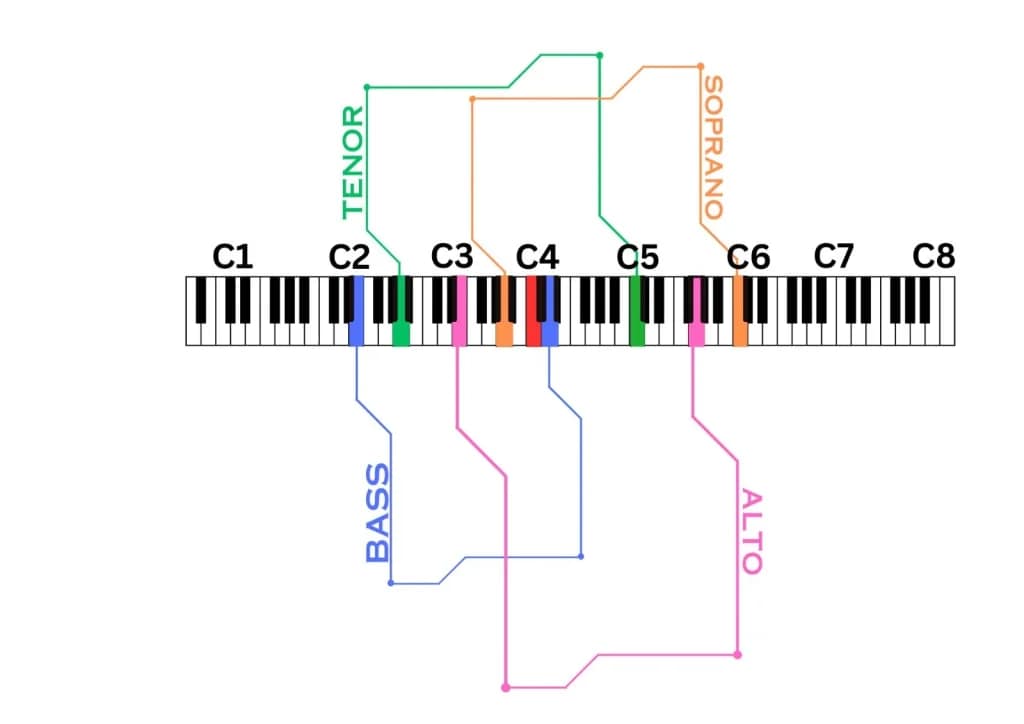
A singer’s range is one of the most fascinating aspects of vocal development. The ability to sing higher or lower notes with comfort, control and confidence is something many singers aspire to achieve.
However, developing range is not simply about reaching more notes. A truly developed voice is one that can move through its range with balance, consistency and freedom.
Professional singers do not improve their range by forcing their voice beyond its limits. They develop it through understanding, coordination, as well as the gradual strengthening of the vocal system.
Vocal Range Begins with Vocal Coordination
Every note within your range requires precise coordination between several parts of the vocal system.
The breath provides the energy.
Next, the vocal folds create the initial sound.
The vocal tract shapes and refines that sound.
Then, the muscles involved in singing adjust and coordinate these movements to allow the voice to move smoothly between different pitches.
When these elements work together efficiently, the voice becomes more flexible and capable of greater expression.
Singers Develop Range Through Efficiency, Not Force
Also, one of the most common misconceptions about extending vocal range is that singers simply need to push harder to reach higher notes.
In reality, forcing the voice often creates the opposite result.
Excessive pressure can introduce tension, reduce freedom and make higher notes feel more difficult.
Experienced singers learn that range develops through efficiency. As coordination improves, notes that once felt challenging may gradually become more accessible.
The goal is not to force the voice higher. The goal is to allow the voice to function more freely.
Building Strength Across the Entire Voice
Furthermore, a balanced range is not created by focusing only on the highest notes.
Singers develop greater freedom by strengthening the entire voice.
This includes developing:
- breath management
- vocal stability
- pitch awareness
- resonance
- flexibility
- coordination between registers
A strong upper range is built upon a reliable foundation.
Understanding Vocal Transitions
As singers move through their range, the voice naturally passes through different areas of coordination.
These transitions can sometimes feel challenging because the voice is adjusting to different physical requirements.
Rather than trying to avoid these changes, singers learn to understand and coordinate them.
With appropriate training, these transitions become smoother and more controlled.
Releasing Unnecessary Strain
Vocal strain is one of the greatest barriers to vocal freedom.
When singers attempt difficult notes, they may unknowingly tighten the jaw, tongue, neck or shoulders.
Vocal strain can also occur when a student is nervous.
This can restrict the natural movement of the voice and make certain notes feel unreachable.
Developing awareness of unnecessary tension allows singers to create the space, in addition to the freedom needed for their voice to develop.
The Importance of Listening and Awareness
Range development is not only physical.
The ear plays an essential role in guiding the voice.
So, as singers improve their ability to hear pitch accurately and recognise how their voice responds, they become better able to make adjustments.
This connection between listening and producing sound is one of the foundations of confident singing.
Progress Happens Through Consistent Development
A singer’s range is not usually transformed overnight.
It develops through patient practice, effective guidance and a deeper understanding of how the voice functions.
Small improvements in coordination, awareness and technique gradually create greater freedom.
The strongest voices are not built by chasing individual notes. They are built by developing the entire vocal instrument.
Final Thoughts
Developing vocal range is not about forcing the voice to reach beyond its natural ability.
It is about creating the conditions that allow the voice to expand comfortably and efficiently.
Through improved coordination, balanced technique and greater awareness, singers can gradually develop a wider, more reliable and more expressive range.
Consequently, every voice has the potential to grow when it is understood and developed correctly.
Explore Our Foundational Lessons
Continue developing your vocal range with carefully structured online singing lessons designed to improve coordination, increase flexibility and build lasting confidence.
Recommended Starting Points
- Vocal Range Development
- Beginners guide to Lessons (Free Lesson)
- Breath Control
- Vocal Ear Tuning®
- Projection for Singing and Speaking
- The Singers Alphabet©
- Effective Posture
- Pitch Accuracy
- Vocal Warm Ups (Free Lesson)
- Explore the Complete Lesson Library →
Virtual Insight
Vocal range is not created by reaching for notes. It is developed by creating the coordination that allows those notes to emerge naturally. When the vocal system works together, the voice discovers new possibilities without force.