
Stage Fright Tips for Singers: Taking Control
Lesson Overview
Stage fright is one of the most common fears in the world. Whether you are speaking, singing, acting, presenting, or performing in any way. The fear of making mistakes or not being ‘good enough’ can feel overwhelming.
This lesson is designed for beginners and focuses on understanding stage fright. Also, reframing the fear of imperfection. As well as learning practical techniques to regain control and perform with confidence.
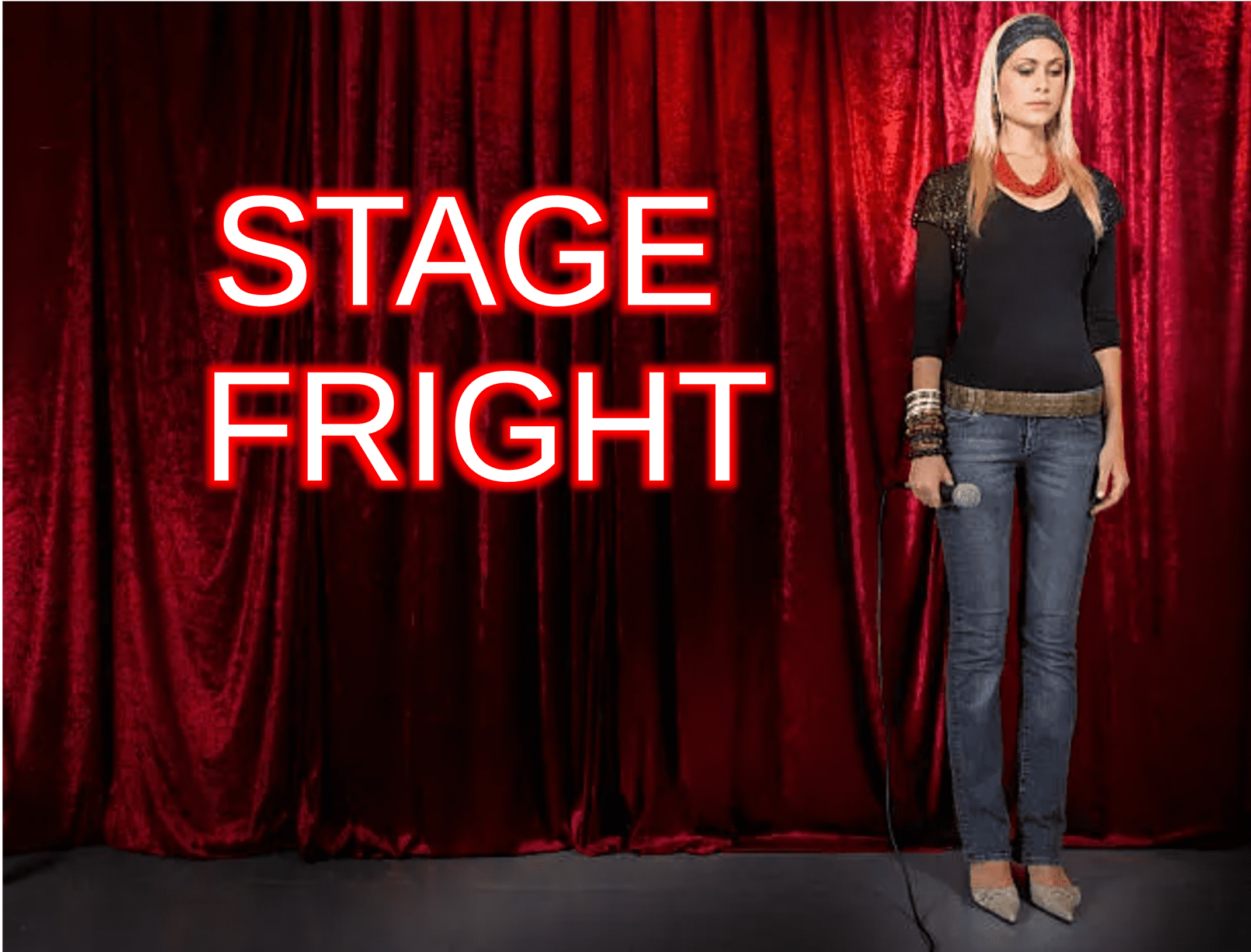
Ultimately, by the end of this lesson, you will understand that stage fright is not a weakness. It is a natural response that can be managed, redirected and even used to improve performance.
Learning Objectives
By completing this lesson, you will be able to:
- Understand what stage fright really is and why it happens
- Identify how fear of imperfection affects performance
- Reframe mistakes as part of growth and expression
- Learn simple techniques to calm nerves before and during performance
- Build a healthier, more confident performance mindset
1. Understanding Stage Fright
Stage fright is a stress response, not a personal failure. When you step into a performance situation, your brain may interpret it as a threat. This triggers the fight-or-flight response, releasing adrenaline into your body.
Common symptoms include:
- Rapid heartbeat
- Shaking hands or voice
- Sweating
- Tight chest or shallow breathing
- Racing thoughts or self-doubt
These sensations can feel scary, but they are actually signs that your body is preparing to act. The problem isn’t the adrenaline, it’s how we interpret it.
Many beginners believe:
- If I feel nervous, I’m not ready.
- If I make a mistake, everyone will judge me.
- Good performers don’t feel fear.
In reality, even experienced performers feel stage fright. The difference is that they have learned how to work with it instead of against it.
2. The Fear of Imperfection
At the heart of stage fright is often the fear of imperfection. Essentially, the belief that you must perform flawlessly to be accepted or respected.
This fear can show up as:
- Over-practicing out of panic
- Avoiding opportunities to perform
- Freezing or blanking out
- Harsh self-criticism after small mistakes
Perfectionism creates pressure that blocks creativity and presence. When your focus is on ‘not messing up,’ your attention is pulled away from what actually matters: connection, expression, knowledge and communication.
A key truth to remember:
Audiences connect to authenticity, not perfection.
Most people don’t notice small mistakes. Yet, when they do, they often find them human and relatable.
3. Reframing Mistakes
One of the most powerful shifts you can make is changing how you view mistakes.
Instead of seeing mistakes as:
- Proof you are not good enough
- Something to fear or avoid
Begin seeing them as:
- Feedback for growth
- A normal part of learning
- Evidence that you are trying something brave
Every performance, even a bad one, provides valuable experience. Progress does not come from perfect performances, but from imperfect practice and repetition.
Try this mindset shift:
“My goal is not to be perfect. My goal is to show up and express.”
4. Practical Techniques to Manage Stage Fright
A. Breathing for Calm
Slow breathing tells your nervous system that you are safe.
Exercise:
- Inhale slowly through your pursed lips for 4 seconds
- Hold for 2 seconds
- Exhale through your mouth for 6 seconds
- Repeat 5 times
Effectively, this can be done before or even during a performance.
B. Grounding Your Body
Stage fright pulls you into your head. Fortunately, grounding brings you back into your body.
Exercise:
- Feel your feet on the floor
- Gently press your toes down
- Notice three things you can see and hear
This anchors you in the present moment.
C. Control Your Heartbeat
Replace critical thoughts with supportive ones.
- I will sip this water to lubricate my throat.
- My throat is dry, I will sip this water few times, then breathe.
5. Building a Performer’s Mindset
Confidence is not the absence of fear, it is the willingness to act despite fear.
Strong performers:
- Accept nervousness as normal
- Focus on the message or emotion, not themselves
- Allow imperfections without panic
- Measure success by effort, not outcome
Remember:
Every time you perform while scared, you build courage.
Consequently, stage fright shrinks when you stop trying to eliminate it and start learning to carry it with you.
Reflection Exercise
Take a moment to reflect and write down your answers:
- What do I fear most about performing?
- What is the worst realistic outcome and how would I recover?
- What would change if I allowed myself to be imperfect?
Lesson Summary
- Stage fright is a natural response and not a flaw.
- Fear of imperfection increases anxiety and blocks expression.
- Mistakes are part of growth, but are not a failure.
- Simple breathing, grounding and mindset shifts consequently reduce fear.
- Confidence comes from practice, as well as self-compassion